
ferskvandskrabber: hvad spiser de?
Indlæg fra det gamle forum, gengivet som arkiv. Er det dit indhold, og vil du have det fjernet eller dit navn gendannet?
seb-0709 — 15. november 2009, 21:43
hej 😀 har lige købt 2 ferskvandskrabber vil bare lige høre hvad sådan nogen spiser*blink* jeg har en panser ål som spiser frosne rejer og krabberne nipper lidt til rejen når foder panser ålen men spiser de andet, og hvad?
Slammers5k — 15. november 2009, 21:51
De er ådselsædere, så de æder det du propper derned, du skal bare sørge for at de for det rigtige.
Du burde variere kosten så meget som muligt, det vil de sætte pris på.
Ville nok fodre med myggelarver, forskellige grøntsager, krill, andre "crustacean" synkende piller, regnorme, forskellige planter, knuste æggeskaller eller andet med calcium i til deres skal.
Du burde variere kosten så meget som muligt, det vil de sætte pris på.
Ville nok fodre med myggelarver, forskellige grøntsager, krill, andre "crustacean" synkende piller, regnorme, forskellige planter, knuste æggeskaller eller andet med calcium i til deres skal.
chrisser — 16. november 2009, 20:58
"calcium i til deres skal", er skallen ikke opbygget af protein? (det r den hos rejer)
seb-0709 — 16. november 2009, 21:06
tak for rådene, har fundet ud af at de kan lide salat og regnorme 😀 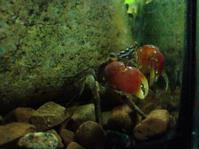
chrisser — 17. november 2009, 22:06
Øhhh, kan de omsætte regnorme, ligeom det er nogle der fodrere div fisk/mm*blink* m kalvehjerter men det viser sig de slet ikke kan omsætte det
Havd m #3?
Havd m #3?
Slammers5k — 17. november 2009, 22:34
[citat]"calcium i til deres skal", er skallen ikke opbygget af protein? (det r den hos rejer)[/citat]
Skallen er opbygget af ca. 30-40% protein, 30-50% calcium carbonate og calcium phosphate og 20-30% chitin..
De kan selv opbygge den nye skal af protein og chitin ud af deres diæt, så krævers der kun calcium for at hærde den.. det er her det er vigtigt med hårdt vand og evt. calcium i deres diæt da det opbygges i nogle gastrolytter de har som kan optage det af vandet bl.a.
The crustacean molt cycle is made up of the following stages: premolt, molt (ecdysis), postmolt, and intermolt; the last is the longest stage (Drach and Tchernigovtzeff, 1967), during which most of the calcium is stored in the cuticle. As the animal approaches premolt, the exoskeleton undergoes partial degradation, with the calcium ions being dissolved out of the mineralized matrix and transferred through the integumentary epithelium to the hemolymph (Ahearn et al., 2004). The calcium ions are taken up from the hemolymph to form the gastroliths.
During ecdysis, the gastroliths collapse into the stomach, where they are digested. After ecdysis, rapid remineralization of the cuticle during the postmolt stage relies on the calcium digested from the gastroliths together with exogenous calcium absorbed from the surrounding water. This massive calcium accumulation is illustrated in reports of crustaceans that double their cuticle calcium content as early as 12 h after ecdysis (Greenaway, 1985). Calcium originating from the gastrolith provides an immediate endogenous source for the calcification of essential body parts such as mouthparts and walking legs (Willig and Keller, 1973; Aiken and Waddy, 1992; Wheatly and Ayers, 1995).
Reference : (wops referencen kræver bruger login, den må i undvære så 🙁)
Skallen er opbygget af ca. 30-40% protein, 30-50% calcium carbonate og calcium phosphate og 20-30% chitin..
De kan selv opbygge den nye skal af protein og chitin ud af deres diæt, så krævers der kun calcium for at hærde den.. det er her det er vigtigt med hårdt vand og evt. calcium i deres diæt da det opbygges i nogle gastrolytter de har som kan optage det af vandet bl.a.
The crustacean molt cycle is made up of the following stages: premolt, molt (ecdysis), postmolt, and intermolt; the last is the longest stage (Drach and Tchernigovtzeff, 1967), during which most of the calcium is stored in the cuticle. As the animal approaches premolt, the exoskeleton undergoes partial degradation, with the calcium ions being dissolved out of the mineralized matrix and transferred through the integumentary epithelium to the hemolymph (Ahearn et al., 2004). The calcium ions are taken up from the hemolymph to form the gastroliths.
During ecdysis, the gastroliths collapse into the stomach, where they are digested. After ecdysis, rapid remineralization of the cuticle during the postmolt stage relies on the calcium digested from the gastroliths together with exogenous calcium absorbed from the surrounding water. This massive calcium accumulation is illustrated in reports of crustaceans that double their cuticle calcium content as early as 12 h after ecdysis (Greenaway, 1985). Calcium originating from the gastrolith provides an immediate endogenous source for the calcification of essential body parts such as mouthparts and walking legs (Willig and Keller, 1973; Aiken and Waddy, 1992; Wheatly and Ayers, 1995).
Reference : (wops referencen kræver bruger login, den må i undvære så 🙁)
Spørgsmål & svar
Der er endnu ikke stillet nogen spørgsmål om dette.
Log ind for at stille et spørgsmål.